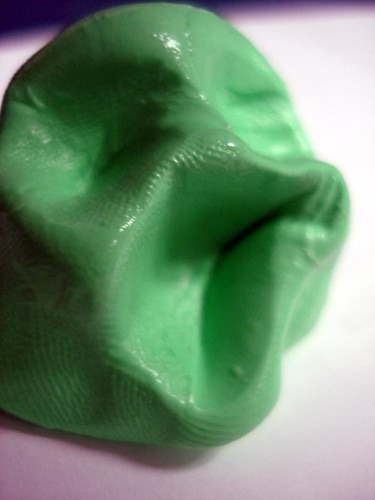
In science class, we did a lab which demonstrated plasticity. Plasticity is the ability to retain a shape attained by pressure deformation. The mixture we created in the lab was a solid, with characteristics of a liquid, because it flowed like a liquid, yet it was in the form of a solid. At first, it was white, but after we added the food coloring, it turned green. It was sticky, rubbery, and looked like silly putty. When handled, at first it was hard, but then it started to drip off your hand like a liquid would. If you kept it on there long enough, it would dry up again. If you pushed your finger in fast, the mixture stayed about the same. But if you pushed your finger in slow, it sank fast. This mixture was similar to the Earth's mantle because the mantle needed heat and pressure to become a sphere, just like the mixture did. This lab was so much fun! It was awesome to play with the "silly putty." I wish I could do it again!
Wednesday, May 27, 2009
Monday, May 18, 2009
October Sky Response

Last week, our unit watched "October Sky," a movie based on a true story. It took place in October of 1957 in Coalwood, West Virginia. It is focused on a boy named Homer, whose dad works in the coal mines. His father wants him to work there too someday, but is shocked to learn that his son suddenly finds an interest in rockets after seeing Sputnik in the night sky.
The first rocket was sent into space by Germany in 1942. It was a V2 missile. The first satellite was launched in 1957. It was called Sputnik. Two kinds of rockets are liquid fuel rockets, and solid fuel rockets. To learn more about rockets go to http://coolcosmos.ipac.caltech.edu/cosmic_kids/AskKids/v2rocket.shtml and http://wiki.answers.com/Q/What_are_the_different_types_of_rockets
In some states, coal mining is one of the most important industries. But it can also be very dangerous. At first, coal miners brought down canaries to see if there were any poisonous gases, because small birds are more sensitive to the air then we are. If the canary died, the miner would get out of there as soon as possible in order to save his life. Another danger is that sometimes a tunnel could collapse, or even worse, rocks can fall on you and you could get injured or die.
The characters in this movie showed many character traits. Homer and his three friends cooperated very well together, and they eventually found a rocket that worked and could be entered in the school science fair. I believe Homer's dad did not show respect towards his son's new interest in rockets because he was a drunk, and a very stubborn man. He really wanted Homer to follow in his footsteps, but I think Homer made the right decision because working in a coal mine all your life doesn't give you a sense of accomplishment. Homer was assertive with his dad because he knew he was making the right choice by sticking with something he loved. And look where he ended up, in NASA! Meanwhile, I think his dad wasted his whole life in a coal mine where he almost died.
I personally really liked this movie because it was touching and interesting. I felt kind of sad when Homer gave up his rocket dream and started working at the mine when he thought he started the forest fire. I was so happy when Homer learned that he didn't start the fire and then won the national science fair because I knew that he deserved it. I'm glad we watched this movie because I learned so much!
Wednesday, May 6, 2009
Response to Cystic Fibrosis

This blog was about cystic fibrosis. I learned many things from it, like most of the symptoms are in the lungs, pancreas, and liver. The skin can taste salty, and you can get pneumonia and bronchitis very easily. A genetic mutation stops the production of a protein in cells of the lungs, liver, and pancreas. I hope that scientists find a cure very soon, because this disease can affect your life span.
Tuesday, May 5, 2009
Genetic Disorders- Fragile X Syndrome
Fragile X Syndrome was first discovered in the late 1970's. It is a genetic disease that causes mental retardation, autistic-like behavior, and ADHD. Some more minor symptoms are depression, very slurred or broken speech, and no attempt to verbal communication. Unfortunately, there is no cure, but there are various drugs that are used to help, such as antidepressants, sleeping medication, and anxiety medications. The good news for people with Fragile X Syndrome is that their life span is usually unaffected by it. In the world, this disease occurs in about 1 in 4,000 males and 1 in 8,000 females. Males are more vulnerable. The cause of it is cells that are mutated by the Fragile X Syndrome mental retardation gene, which contains the Fragile X Syndrome mental retardation protein. The mGluR Theory of Fragile X might lead to further treatments. FRAXA-funded scientists are currently studying animals, and trials of new compounds are being planned. A clinical trial of one drug is underway. I feel really bad for people with this disorder. I hope they find a cure very soon. For more information go to

http://www.ikm.jmu.edu/Buttsjl/ISAT493/Fragile%20X%20Syndrome/fragilexsymptoms.html
http://www.ikm.jmu.edu/Buttsjl/ISAT493/Fragile%20X%20Syndrome/fragilextreatment.html
http://www.fraxa.org/research_summaryFindings.aspx
Wednesday, February 25, 2009
Mammoth Skeleton Found
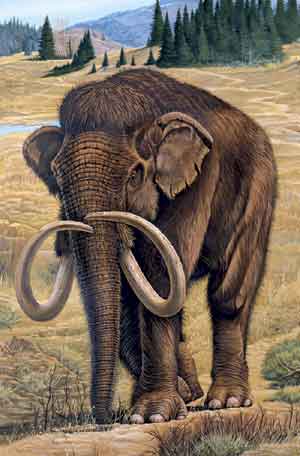
An almost complete skeleton of a Columbian mammoth was discovered on February 20th in Los Angeles while workers were digging for an underground parking garage near La Brea Tar Pits. Researchers from the Page Museum nearby named it "Zed." Zed died in its 40's about 4o,ooo years ago. It supposedly became stuck in a tar pit along a river bed and died of exhaustion or starvation. His skeleton remained intact because soon after he died he was washed away by a flood, and then covered by enough sediment to keep predators from eating the carcass. This discovery is going to double the size of the museum's collection. "He's really big compared to the mammoths we've recovered from La Brea before," said laboratory supervisor Shelley Cox.
I think that uncovering such a complete skeleton sounds awesome! I would love to see it! For more information visit http://news.yahoo.com/s/nm/20090220/sc_nm/us_mammoth;_ylt=AqbBDTQ3aix7eLvYiXfEbV8PLBIF
Tuesday, February 24, 2009
Gaza Reconstruction
This article is about the reconstruction of Gaza, which will likely top $900 million. Hillary Clinton will also be leaving soon to go there. Organizations such as the United Nations are trying to help. Reconciliation talks are going to start in Egypt on Wednesday between Hamas and Palestinian president Mahmoud Abbas' Fatah movement. Abbas said, " This (new unity) government must have the acceptance and recognition of all parties."
I think it's good that people are reaching out to help Gaza. I'm excitied that Hillary Clinton will be traveling to the Middle East soon. Hopefully she can make things change. For more information go to http://news.yahoo.com/s/ap/20090224/ap_on_re_mi_ea/israel_us;_ylt=Alqs5lnMPfH5hjeMxiCxH5VvaA8F
Monday, February 23, 2009
Thursday, February 5, 2009
Roller Coasters

In class, we are building roller coasters. Some of this has to do with kinetic and potential energy. Kinetic energy is the energy of motion. Potential energy is the energy of position. Roller coasters also deal with Newton's laws of motion. His first law states that an object at rest will remain at rest and an object in motion will remain in motion at constant velocity unless acted upon by an unbalanced force. Newton's second law explains how force, mass, and acceleration are related. The third law states that for every action, there is an equal and opposite reaction. Some new facts I learned from http://en.wikipedia.org/wiki/Newton%27s_laws_of_motion were that Newton gave credit to Galileo for his first law. I also learned that another name for his third law is law of reciprocal actions, and that inertia was described in the third century BC by the Chinese philosopher Mo Tzu.
I think that building roller coasters is fun and educational at the same time. It is also challenging because it's tricky when the marble doesn't make it through. I think that energy and Newton's laws apply a lot to what we're doing.
Wednesday, February 4, 2009
Minor Earthquake in Morris County
Scientists reported an earthquake in Morris County, NJ on Monday night. Fortunately it was minor; just a 3.0 magnitude one. Lauren Roman, a victim of the earthquake, said, "It just started like vibrating, the whole house was vibrating." Seismologists say that tremors like this one occur about once every five years. One seismologist, Leonardo Seeber, said that, "There might be aftershocks in the next several days." Thankfully, nobody was hurt.
I was kind of shocked to hear about this earthquake, especially since we don't get many around here. We were pretty lucky to not experience it. I was surprised to learn that the largest quake ever in our area was a 5.0 in 1884. I'm just glad that nobody got hurt. To learn more go to http://www.wpix.com/landing/?blockID=203648&feedID=1404
Friday, January 23, 2009
Solar Eclipse in the Indian Ocean

This coming Monday, an annular solar eclipse will occur. But you can only see it if you travel to the Indian Ocean. An annular eclipse happens when the Moon does not completely cover the Sun's surface, resulting in a ring-like crown of solar light. There will only be one of these amazing events this year. The next annular eclipse won't be until January 15, 2010.
Wow! This sounds really interesting to watch, but unfortunately I'm not traveling to the Indian Ocean any time soon. I hope one will eventually occur near New Jersey. For more information, go to http://news.yahoo.com/s/afp/20090123/sc_afp/spaceastronomyeclipseasiaafrica;_ylt=Ar0SXzZxmPnf5N3Ehv6pvx2HgsgF
Wednesday, January 21, 2009
Our First Black President!

Article #1) This article from http://www.cnn.com/2009/POLITICS/01/20/obama.inauguration/index.html was about the inauguration of our first black president, Barack Obama. It talked about the huge crowds that gathered by the National Mall, and Obama's touching speech. Then it went on to say how he said good-bye to Bush and about the lunch-in. Later, he rode in a car down Pennsylvania Avenue in a parade to the White House. That night Obama attended ten balls with his family.
I think it's great to have the first black president. I bet lots of blacks around the country are celebrating. I absolutely loved Obama's speech. It sounded like he knew just what to do. A quote from his speech that was in the article is "Today I say to you that the challenges we face are real. They are serious, and they are many. They will not be met easily or in a short span of time. But know this, America: They will be met." I love this quote because it gives a positive vibe. I am now a big fan of Obama, and I believe he is the solution to America's problems.
Article #2) This article from http://www.cnn.com/2009/POLITICS/01/20/inauguration.balls/index.html?iref=newssearch was about the ten different balls that Obama and his family attended. Each one had a different name. A few were the Neighborhood Ball, Home State Ball, Youth Inaugural Ball and Commander-in-Chief Ball. The article also said who was at each ball and who sponsored it.
I would love to attend a ball with Obama! But going to ten sounds a little tiring and boring. A question I have is who sang at the balls besides the Neighborhood Ball? A quote that Obama said in the article is "First of all, how good-looking is my wife?" Speaking of Michelle, I loved her dress! I hope Obama had fun and is ready to be president!
Thursday, January 8, 2009
More About Waves

In science class, we are learning about waves. The basic properties of waves are amplitude, wavelength, frequency, and speed. Amplitude is the maximum distance that the particles of the medium carrying the wave move away from their rest positions. Wavelength is the distance between two corresponding parts of a wave. Frequency is the number of complete waves that pass a given point in a certain amount of time. It is measured in units called hertz. Speed is how far the wave travels in a given length of time. The high part of a wave is called the crest, and the low part is called the trough. A new fact that I learned from http://en.wikipedia.org/wiki/Waves, is that all waves experience reflection, refraction, diffraction, interference, dispersion, and rectilinear propagation. I also learned that a standing or stationary wave is a wave that remains in a constant position.
I think that learning about all kinds of waves is fun because there are so many kinds of waves. There are transverse, electromagnetic, seismic, and gravitational waves. I hope to learn even more over the next few days.
Wednesday, November 26, 2008
More About Symbiosis
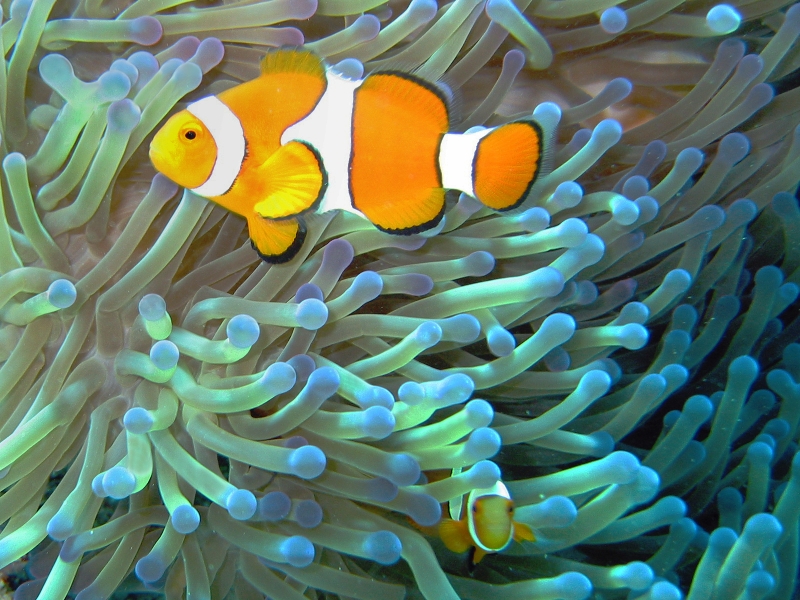
Symbiosis is a relationship between two organisms where one organism lives on, near, or inside the other, and where one of them benefits. There are three types of symbiotec relationships- mutualism (both organisms benefit), commensalism (one benefits and the other is not harmed), and parasitism (one benefits and the other is harmed). An example of mutualism is a clownfish and a sea anemone. An example of commensalism is lichen on a tree. An example of parasitism is fleas on a dog. Some new facts I learned from http://en.wikipedia.org/wiki/Symbiosis, were that the term "symbiosis" was first used by German mycologist Heinrich Anton de Bary in 1879. He defined it as "the living together of unlike organisms." I also learned that the evolution of all eukaryotes (plants, animals, fungi, and protists) is believed to have resulted from a symbiosis between various sorts of bacteria.
I think that symbiotec relationships are very important in the field of ecology. It's also interesting to learn what type of relationship various animals have with each other.
I think that symbiotec relationships are very important in the field of ecology. It's also interesting to learn what type of relationship various animals have with each other.
Saturday, November 15, 2008
Which Came First- The Egg or the Chicken?

People have been debating over which came first for hundreds of years now, but the truth is that scientists have the answer. Scientists believe the egg came before the chicken because of a discovered nest of a small carnivorous dinosaur. The nest has some bird-like characteristics, so if you take the saying literally, obviously the egg came before the chicken. Dinosaurs were making bird-like nests and laying bird-like eggs way before chickens evolved. So now the question is: Which came first- the dinosaur or the egg?
Before I read this article, I thought the chicken came before the egg. But now I realize that bird-like eggs came before birds and chickens. I hope scientists are able to keep researching so that we figure out if the dinosaur or the egg came first. For more info, go to http://news.yahoo.com/s/livescience/20081114/sc_livescience/whichcamefirsteggsbeforechickensscientistsnowsay;_ylt=AvGp6zJWT4M7zk6OzFdNXpkPLBIF
Before I read this article, I thought the chicken came before the egg. But now I realize that bird-like eggs came before birds and chickens. I hope scientists are able to keep researching so that we figure out if the dinosaur or the egg came first. For more info, go to http://news.yahoo.com/s/livescience/20081114/sc_livescience/whichcamefirsteggsbeforechickensscientistsnowsay;_ylt=AvGp6zJWT4M7zk6OzFdNXpkPLBIF
Tuesday, October 28, 2008
More About Decomposers
In science class, we learned about decomposers. Decomposers are organisms that break down the dead bodies of other organisms for energy. A few examples are bacteria, earthworms, and mushrooms. By breaking down these dead organisms, they are "recycling" nutrients. Some new facts I learned from http://www.nhptv.org/NatureWorks/nwep11b.htm, was that decomposers recycle the dead organisms into chemical nutrients like carbon and nitrogen which go back into the earth. I also learned that there are over 1,800 species of earthworms, and that they loosen soil so air can circulate. This helps plants grow.
Wednesday, October 15, 2008
Gray Wolves Back on Endangered List!

On Tuesday October 14th, the U.S. court decided to put the gray wolf of the northern Rocky Moutains back on the endangered species list. Back in April, groups of people went to protest that the government should put the gray wolf back on the endangered list after the government had taken them off the list two months before. The groups did this beause taking them off the list would result in the shooting of wolves by farmers who think they are a threat to their livestock. The government had thought that the reintroduction had been going well, but some people thought otherwise. In 1974, wolves were disappearing. In 1995, 66 wolves were released into Idaho and Yellowstone National Park in Wyoming, in hopes that they would thrive. Now there are about 1,200 gray wolves in Idaho, Montana, and Wyoming.
I'm glad the population of gray wolves is increasing because I think they are amazing animals. When my family and I went to Yellowstone two summers ago, I had heard all about the reintroduction of wolves around the area. I was interested to learn that they were in danger, and that many farmers saw gray wolves as a threat to their livestock. I just hope that one day, gray wolves will come off the endangered species list for good. For more info, go to http://news.yahoo.com/s/afp/20081014/sc_afp/usenvironmentwildlifewolves;_ylt=Amq5Sn7llYuCg0dCzCemhQ8PLBIF
I'm glad the population of gray wolves is increasing because I think they are amazing animals. When my family and I went to Yellowstone two summers ago, I had heard all about the reintroduction of wolves around the area. I was interested to learn that they were in danger, and that many farmers saw gray wolves as a threat to their livestock. I just hope that one day, gray wolves will come off the endangered species list for good. For more info, go to http://news.yahoo.com/s/afp/20081014/sc_afp/usenvironmentwildlifewolves;_ylt=Amq5Sn7llYuCg0dCzCemhQ8PLBIF
Monday, June 16, 2008
Math Is. . . .
Math can be anything from numbers to graphs. Math deals with almost anything in your life. For example, when you go to a gas station, and it says 3.90 for 1 gallon of gas, and you're getting 8 gallons, you would do 3.90 x 8= $31.20. Another example that we talked about in class is when you're at a restaurant and you need to figure out how much to tip the waiter. This is using percents to solve a problem. In math class this year, we learned about percents, fractions, decimals, order of operations, exponents, GCF and LCM, population and sample, scientific notation, and many other topics. As you can see, math can be found anywhere, at anytime.
# $ % < > ? + = ( ) * -
Thursday, May 29, 2008
More About Oil
In science class, we "drilled" for oil. Oil is formed when dead plants or animals sink to the bottom of the earth, and are covered with sandstone and other minerals. Another name for oil is petroleum. Workers spend thousands- even millions of dollars drilling for oil, and 70% of the time they come up dry! But if they do find oil, they could make a lot of money. $ $ Some types of oils are mineral oils, like gasoline, and organic oils, like vegetable oil. It can be used for fuel, heating, cooking, and painting. Crude oil is used to make plastics and other substances. For more info on oil you can go to http://en.wikipedia.org/wiki/Oil
Sunday, May 18, 2008
An Artic Tale

During 6th grade testing, we watched a movie called An Artic Tale. It was about polar bear cubs and a baby walrus and how they survived while their climate was changing due to global warming. The polar bears needed thick snow to catch fish and seals. The walruses needed icebergs to rest on when they got tired of swimming. But global warming was taking away these priorities. A lot of the snow was melting earlier than it should have. Because of this, one of the bear cubs died of starvation, and the baby walrus almost died. This movie was very touching. I learned that if we keep up what we're doing to the Earth, all of the Artic ice could be gone by 2040. That's just 32 years!! Some other things I learned from http://en.wikipedia.org/wiki/Global_Warming was that increasing global temperatures can cause sea levels to rise, and it can increase the intensity of extreme weather events. It also can change the amount and pattern of precipitation. So if we stop global warming, we can save the polar bears!
Wednesday, April 16, 2008
Anthropology
30 years ago, people did not have personal computers. I am thankful that I have one now because I can go on Microsoft Word and type hw. My mom had to use a typewriter. If she messed up, she either had to use white-out or start over. That sounds like a pain! I also like computers because you can check e-mail and play games. Thank goodness for technology!
Subscribe to:
Posts (Atom)


